
Our Program
What goes into a River City Robotics season.
Every robot River City Robotics brings to a FIRST Tech Challenge event is the work of one small team wearing a lot of hats. Our students design it, build it, and code it, then reach out to their community and work to keep the whole program strong for the years ahead. The judges score all of that just as closely as the matches themselves.
An FTC robot has to start each match inside an 18-inch cube, run on its own during a short autonomous period, and then take commands from our drivers for the rest of the match. Getting there, and making it matter beyond the field, takes all of the areas below. They overlap constantly, and most of our students try more than one before they find where they fit.
Follow our robots live on FTC Events: Gladius (26089) · The Dapperbots (23695)
Design
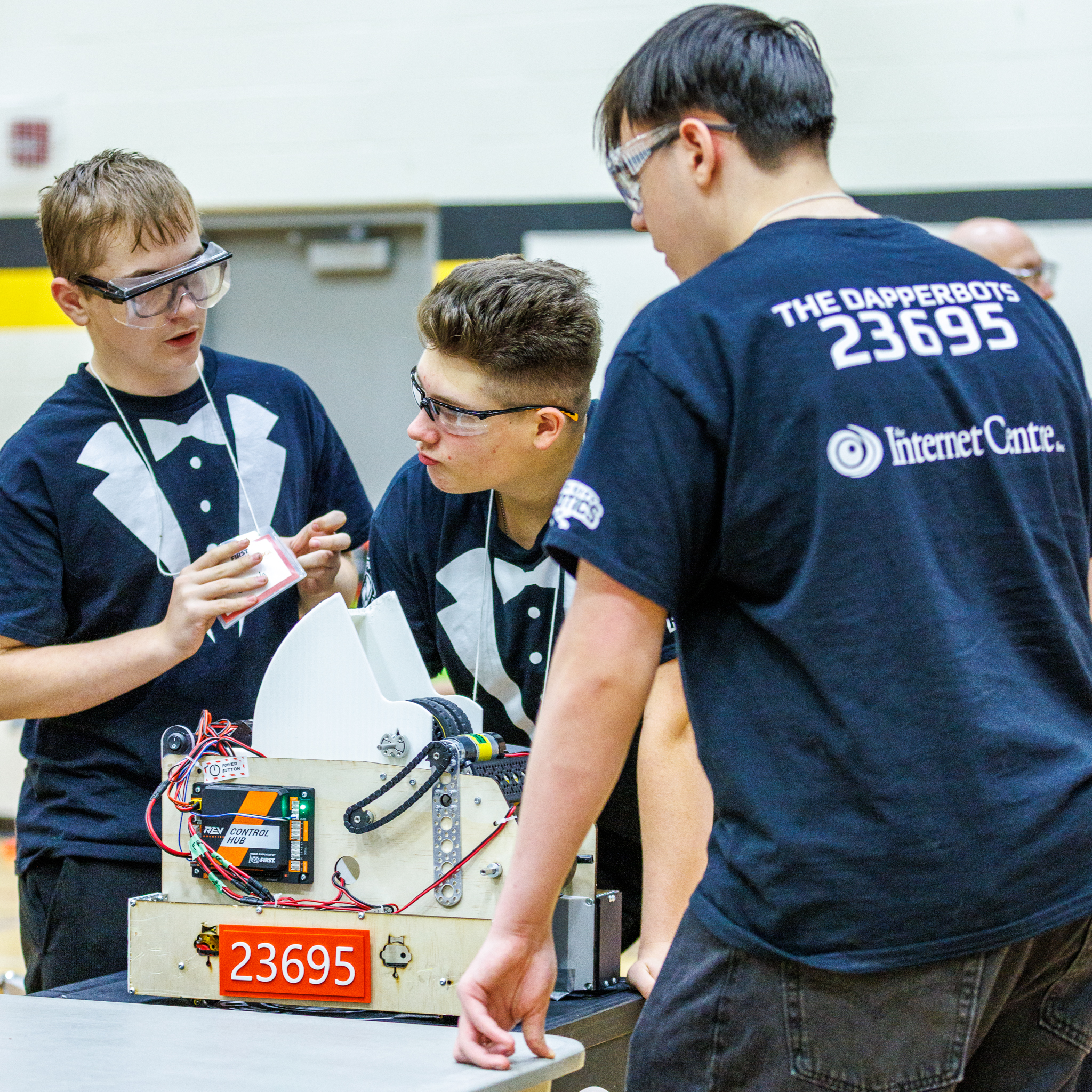
Design is where every season starts. Before a single part is cut, our students study the new game, sketch mechanisms, and model the robot in CAD so the whole team can see how it will fit inside the 18-inch starting cube and still reach everything the game asks of it.
We work the engineering design process the way professionals do: define the problem, brainstorm options, prototype the promising ones, test them, and keep the evidence. The ideas that lose out matter too, because the judges want to see the reasoning behind the robot, not just the finished machine, in our engineering portfolio.
On our teams: Jack Rehill leads design for Gladius; Calvin and Jack drive it for the Dapperbots.
You’ll learn: CAD modeling, mechanism design, the engineering design process, technical drawing, and how to defend a decision to a panel of judges.
Build
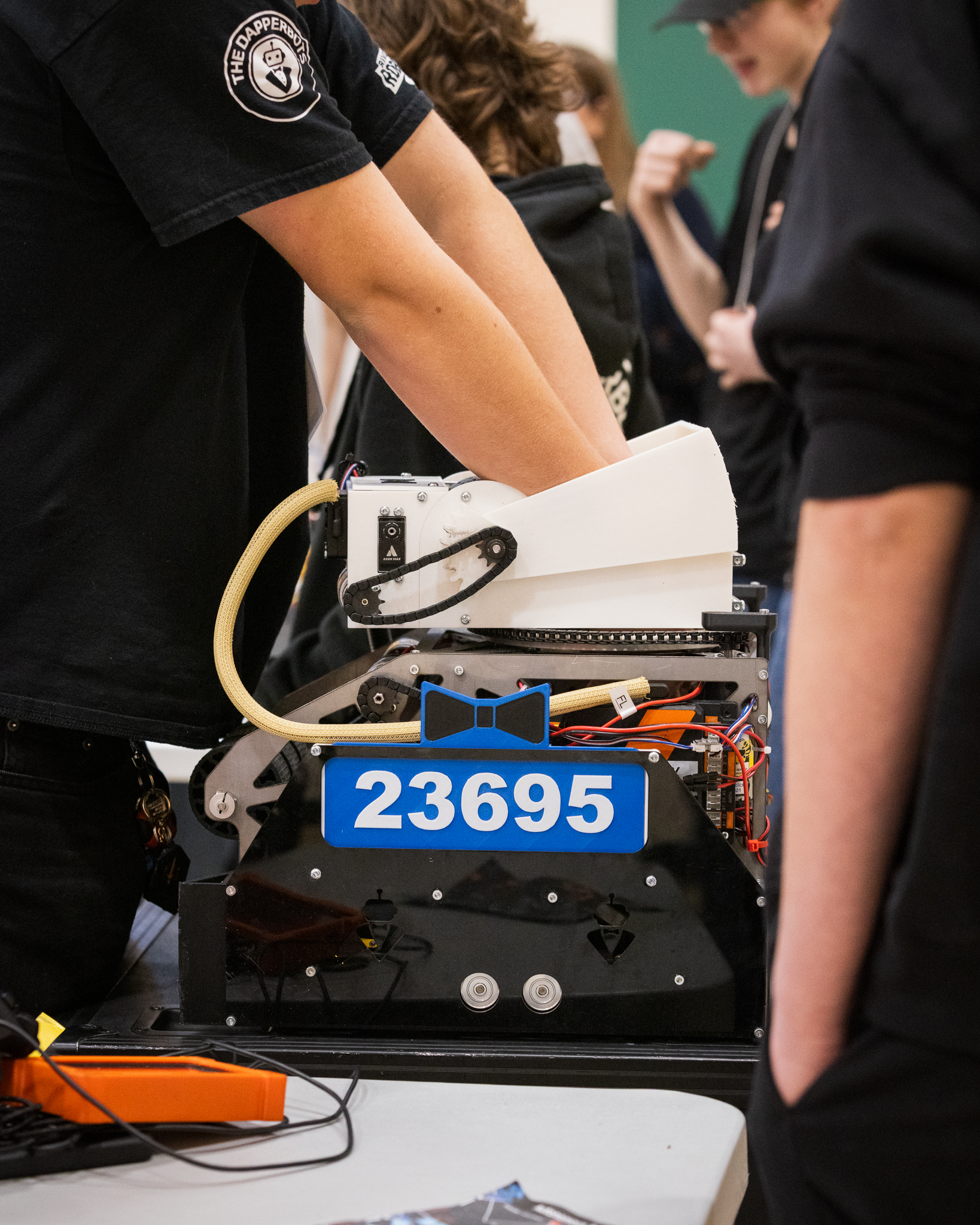
Build turns the drawings into a machine. This is the hands-on side of the club: cutting and drilling structural parts, wiring motors and sensors, 3D printing custom brackets, and assembling it all into a robot that can survive a full day of competition.
Things break. Bolts rattle loose and a mechanism that worked on the bench fails under match pressure, so our builders learn to iterate fast and write down what changed. The same printers and skills also go toward our community work, including custom assistive devices we make for local partners.
On our teams: Walter Hrudey and Tavin Mitchell anchor the build for Gladius; Connor and Jack handle it for the Dapperbots.
You’ll learn: shop and assembly skills, 3D printing, the CAD-to-part workflow, wiring, and how to build something that has to work on demand.
Coding

Code is the brain. A match opens with a short autonomous period where the robot runs entirely on its own program, then hands control to the drivers, so our software has to handle both. Our coders write in Java, wire up the sensors and camera-based vision the DECODE game rewards, tune motor control, and build the autonomous routines that score points before anyone touches a controller.
It is real software, and it has to work the first time on a noisy competition floor. That means testing, version control, and the kind of calm debugging that finds the problem when the robot does not do what the code says it should.
On our teams: Sam Kraiger programs for Gladius; Adam and Armin code for the Dapperbots, with Armin leading autonomous.
You’ll learn: Java, sensor and vision integration, control tuning, autonomous strategy, and how to debug live under pressure.
Reach
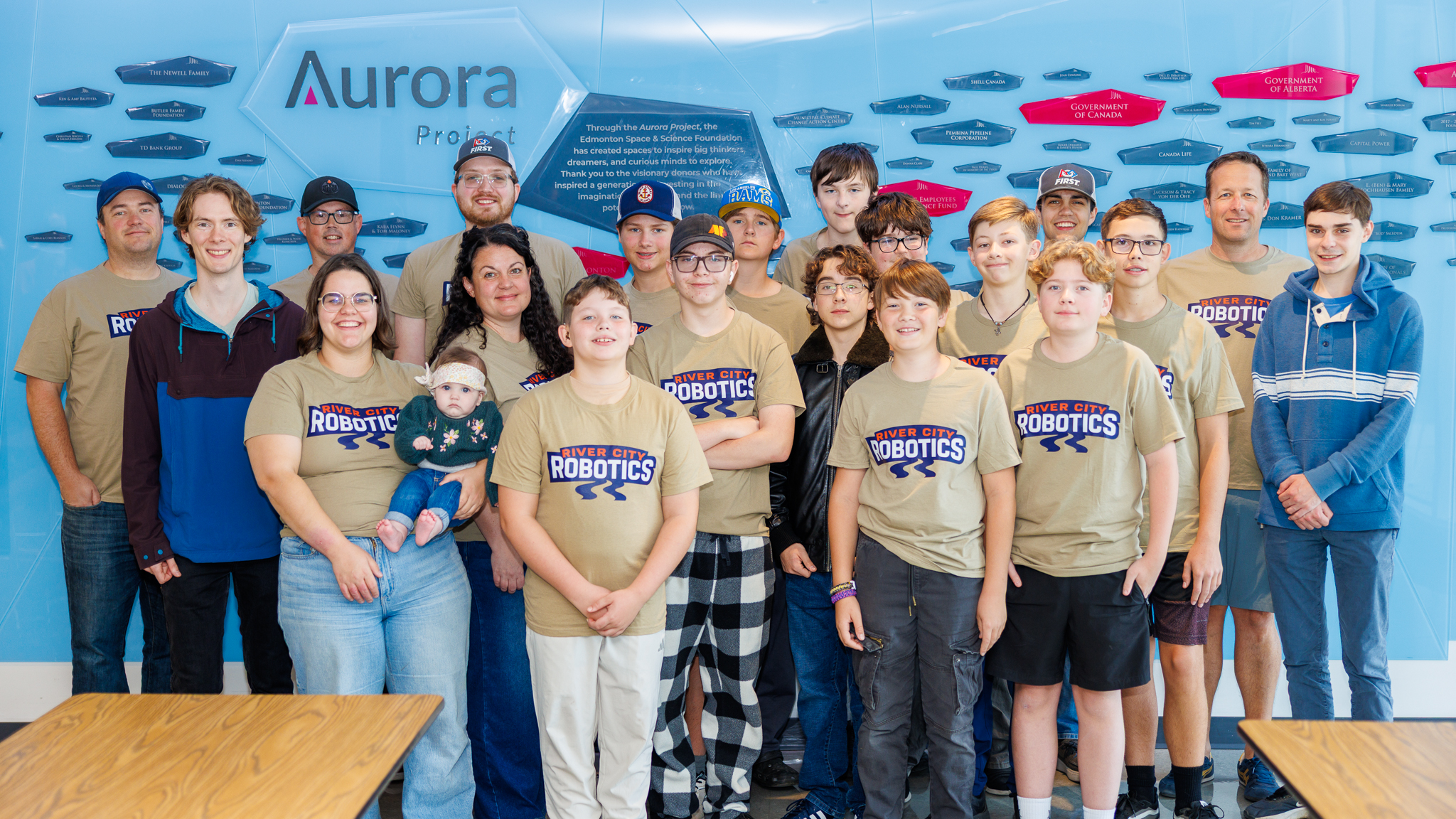
Reach is how the team gives back and grows the game. FIRST is bigger than any one robot, and a huge part of what our community and the judges care about is whether we are bringing more people into it. River City Robotics members put their skills to work beyond the competition, including 3D printing custom assistive devices in partnership with local organizations that support people with disabilities.
We also mentor newer and younger teams, run demonstrations, and help students who have never touched a robot take their first step into FIRST. This is the side of FTC the judges reward most, and it is a big part of how Gladius earned the Inspire Award and a trip to the World Championship.
On our teams: Luke Meier leads community outreach for Gladius, and every member helps present, mentor, and represent the club with gracious professionalism.
You’ll learn: community outreach, mentoring, public speaking, event planning, and welcoming new people into STEM.
Sustain
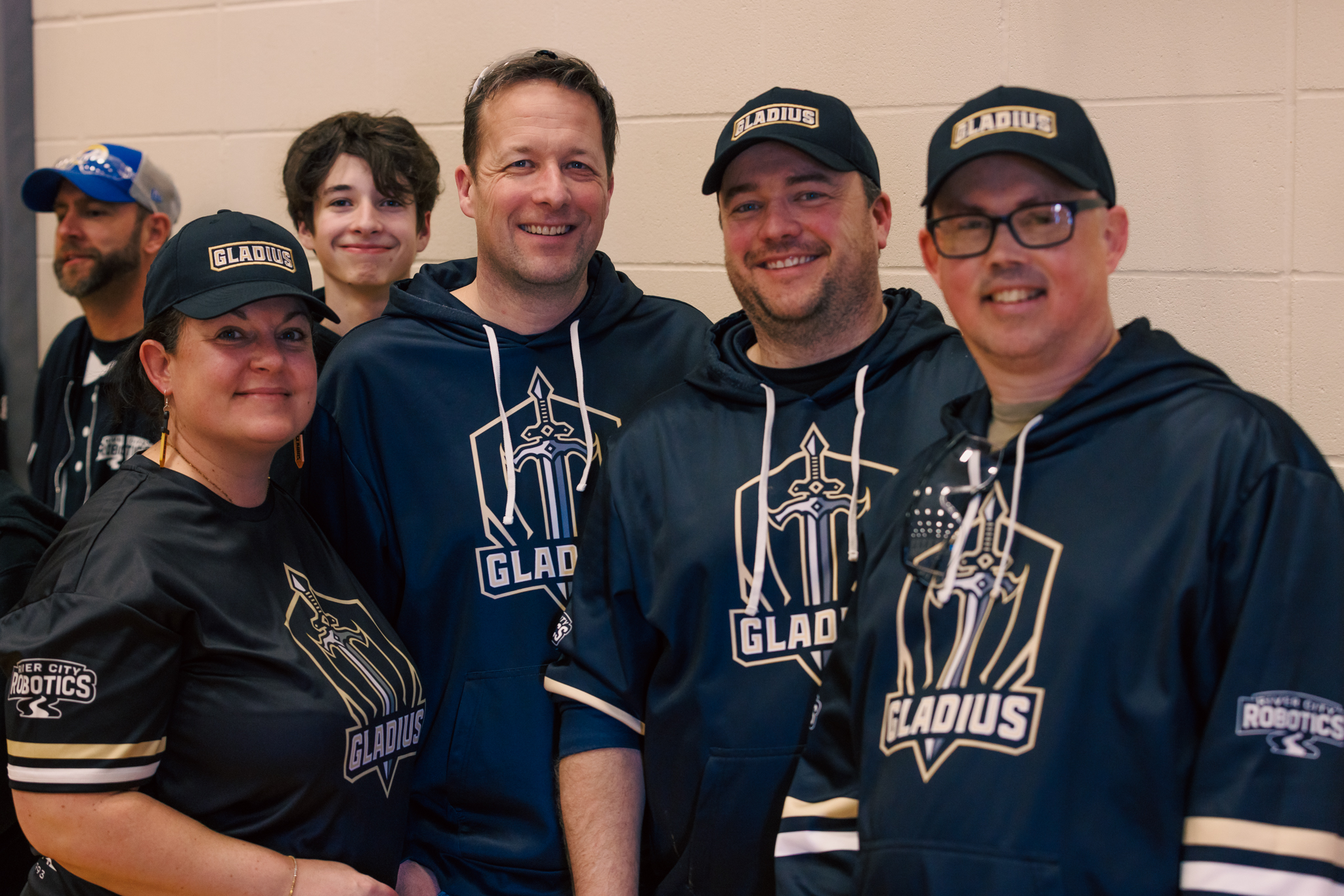
Sustain is about making sure River City Robotics is still here, and still strong, years from now. A great season is not just one good robot – it is a program with a plan: funding, mentorship, and a pipeline of students ready to step up.
We run two teams, Gladius and the Dapperbots, so newer members learn alongside experienced ones and there is always a next generation coming through. Our coaches and mentors pass on what they know, and our sponsors give us the tools, the workspace, and the runway to keep building. That long-term focus is part of why Gladius earned a top-three finish for the Sustain Award at the Alberta Championship.
Want to help keep us going? Meet the businesses behind our team, and find out how to join them, on our Our Sponsors page.
You’ll learn: budgeting and planning, fundraising, mentorship, and how to build something that lasts.
Find your spot on the team
You do not have to be an expert in any of this to join. Most of our students start in one area and pick up the others as they go. If any of it sounds like you, we would love to meet you.